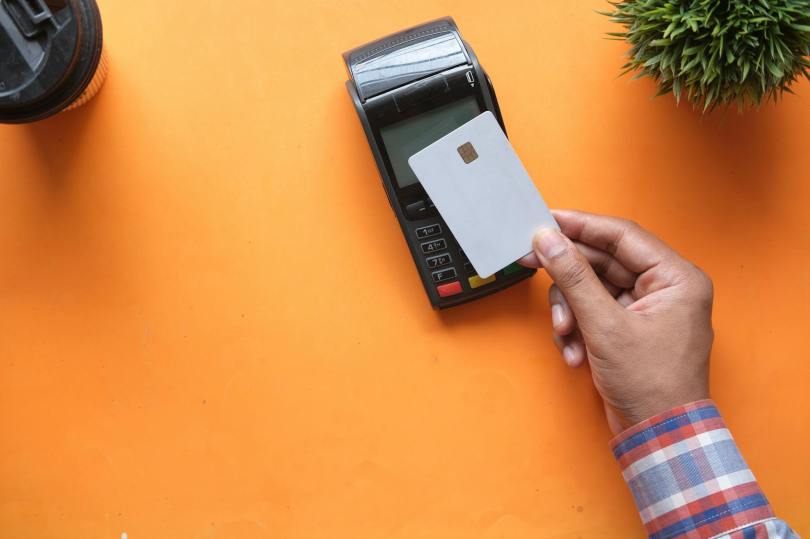
What are the best credit cards?

The best credit cards for me are not necessarily the best cards for you. I don’t find I’ve changed my spending habits much in retirement, but being retired has meant I can spend a bit more time trying to optimize my credit card holdings to maximize benefits to me. One thing that I value above all else is cold, hard, cash. I don’t like “points” cards because understanding what kind of ROI I’m getting is nearly impossible, and always subject to the whims of a points to dollar conversion rate that can be changed at any time. I’m now holding three different credit cards, all of whom pay cash back, and all of them have their place in my spending universe.

Primary Card: Rogers Red World Elite Mastercard

Read about it here. As a Rogers customer1, this card is really the best possible card for my needs:

  • No fees
  • 2% cash back on everything, paid as a reward credit that you then immediately apply to subsequent card purchases; this reward credit is multiplied by 1.5 if you apply it to a subsequent card purchase for a Rogers service.
  • 3% cash back on USD purchases, which erases the 1.5% FX fee charged, and then some
  • Travel insurance, purchase insurance, etc etc
  • Free supplementary cards

The problem with this card is that its credit limit is a bit low; I even asked for an increase and was denied2.

The other problem with this card is that it’s not tied to my normal banking, so I have to pay it manually3. And it only offers a login for the primary card holder, which isn’t ideal.

Secondary Card: CIBC Costco Mastercard

Read about that one here. This one is actually a conversion from another CIBC card I had. Converting a card from one kind to another means you don’t lose your credit limit, which was the main appeal here. I am a Costco member, so this is a good second choice for my needs:

  • no fees
  • 1% cash back on everything except 2% back on gas and Costco.ca, and 3% back on Costco gas4 and restaurants5
  • Cashback paid annually in the form of a Costco gift certificate
  • Travel insurance, purchase insurance etc etc
  • Free supplementary cards

The travel card: Wealthsimple Visa

I’ve been on the waitlist (like many people) for quite a few months for this card now. I finally got my card when I called their support line to query about why a transaction on their prepaid Mastercard6 failed to complete. (Turns out there’s a daily limit on that card that can’t be modified). Anyway, the helpful agent offered to put in a good word for me and a few days later, I was able to successfully apply for the card and immediately download it to my phone7.

The Wealthsimple Visa’s features are a lot like the others:

  • no fee (if you have enough assets with Wealthsimple)
  • 2% cash back on everything, paid into your account every month
  • travel insurance, purchase insurance, etc etc
  • and…most importantly for me, NO foreign exchange fees for any currency

With no foreign exchange fees, Wealthsimple’s Visa becomes the go-to card anytime I’m travelling to a non-US destination. It also becomes my primary card in the event that I cut ties with Rogers, since the only thing the Rogers card does better than the Wealthsimple card is paying for Rogers services.

The Wealthsimple card had a better credit limit than the Rogers card right out of the gate (I guess it helps that I had hard assets with them) but inexplicably does not have the concept of a secondary card, so my spouse is currently locked out of that benefit.

The card that got cut: the CIBC Aventura USD Gold Visa

This was a card I had for a few years when US travel was a more frequent (desirable?) option. It’s not a bad card, especially if you frequently transact in USD, but with two other cards that offered “good enough” coverage on USD purchases, I felt it was no longer needed. And (I forgot this) when I canceled my almost-never-used CIBC USD checking8 account, I lost the “no-fee” aspect of this card. At a cost of zero I might have been convinced to hang on to it “just in case”, but with a $35 annual fee (USD) it was no longer required. An hour long wait on hold with CIBC telephone banking was all it took9.

What card is used when?

  • For foreign currency transactions, Wealthsimple Visa card is best. Rogers card also a good option if USD.
  • For Costco gas and restaurants, Costco card is best.
  • Anything else, Rogers
  1. Internet, television, home phone, if you’re curious. 2 year contract which I’ll probably break at the earliest opportunity 😉 ↩︎
  2. Admittedly, this hurt my feelings a bit. ↩︎
  3. I could set up a PAD, but I trust Rogers about as much as they trust me, it seems. ↩︎
  4. There’s no advantage to actually shopping at a Costco store with this card, which seems weird. My weekly Costco grocery run is paid for with my Rogers Mastercard, since I get 2x the cash back <shrug>. What’s more, the Costco I usually frequent doesn’t have a gas station, and I’m not really willing to make a special trip to go get it — my CAA/Shell combination is about as good. ↩︎
  5. These 2% and 3% rewards have annual caps, but I got bored trying to memorize them ↩︎
  6. Part of Wealthsimple’s chequing account, a good product, in my view ↩︎
  7. Great timing too, since I was in a foreign country at the time. ↩︎
  8. I use American spelling here because (a) that’s how CIBC spells it and (b) it really is a US-domiciled account ↩︎
  9. Writing that sentence has confirmed for me how low my standards for customer service have become. ↩︎


Death, Taxes and Estates: Endgame part 1

I’ve had the dubious privilege of serving as the executor of the estate of my late mother, who was predeceased by my father. I’ve been documenting my journey along the way (previous instalment here).

This instalment is subtitled “Endgame” because late last week I received a Clearance Certificate from CRA. The Clearance Certificate allows me as the executor to distribute the funds in the estate to the beneficiaries without worrying that the CRA will come knocking on my door at some future date looking for taxes1.

So now it is time to move money around from estate to beneficiaries, close accounts and shred the piles of paper in the filing cabinet. Money exists in three places: a CIBC bank account (not an estate account), a CIBC estate account, and in a BMO Investorline estate account.

CIBC Bank Account

Thanks to the advice of a friend who went through this before me, I had a joint chequing account with my mother. It was her account, and I never touched it, but when she died, the account became mine completely, no different than the other chequing account I hold at CIBC. This arrangement proved very handy in the early days of the estate, as I was able to pay funeral expenses out of this account without being out of pocket myself. The balance was low here, and a few e-Transfers to the beneficiaries later, the funds were cleared. A call to CIBC telephone banking (a surprisingly painless experience), and this account was closed from the comfort of my couch.

BMO Investorline

The vast majority of the estate funds are held at BMO Investorline, since I was acting as my parents’ DIY advisor for about 10 years. When my mother died, her RRIF and TFSA passed to her beneficiaries outside of the probate process (you’ve done this, right? Read more here). Her non-registered funds were converted into a brand new estate account and all the assets were transferred in kind. I could not access this account until I had a probated will. With full access, I eventually converted all the holdings into non-interest bearing cash; all that happened over a year ago (December 2024, to be exact). The account has been largely dormant since then, although I did pay the whopping tax bill for my mother’s Final Return2 from it.

Moving the funds out of BMO Investorline couldn’t be easier; thanks to their AccountLink service, you can write cheques against the cash balance held in your non-registered Investorline account. They do charge $1 for each transaction after the first 2 in any calendar month, so I have to make sure I leave enough cash behind to deal with that3.

CIBC Estate Account

Estate accounts are required to deposit cheques made out to the estate. One possible source of such a payment is CRA4, the other is death benefits from CPP/QPP and/or life insurance policies. My experience with the creation and management of a CIBC estate account was a total disaster. Something that should be relatively straightforward is inexplicably very labour intensive. The reasons are probably only knowable to CIBC, but I’ll give my perspective here:

  • The workflow has not been updated in decades. Opening an estate account required me to make an appointment at the bank. At this appointment, I sat in a chair in an office while I watched the bank employee type my information into some sort of online form. My involvement at this meeting was limited to producing a death certificate and repeating answers to questions that the bank already had in their systems (my name/address etc etc).
  • The branch employees do not understand how estate accounts work and they rely on a centrally located help desk to guide them through the process. I know this because the branch employee inadvertently gave me the number to this help desk and the very helpful employee I spoke to there was confused that a customer rather than a branch was calling.
  • There are no electronic records, no electronic access to estate accounts. Deposit a cheque? Visit the bank. Want the balance? Visit the bank. It’s all very circa 1970.
  • And, lastly, for all this, they have the gall to charge a $5 monthly service fee for “record keeping”.

Anyway, I am guessing that all the major banks are terrible with estates, but it’s hard to imagine a worse experience than with CIBC.

So, to close this account, I need an appointment (of course). The soonest one I could get at my local branch was a week away. I’ve compiled all the materials needed to unlock the funds (probated will, death certificate, blood sample) so I’m hoping this is a “one and done” kind of visit, but I’m not holding my breath on that one.

What’s especially annoying about the estate account is that it has a relatively small amount of money in it, growing smaller monthly thanks to the monthly service fee.

But this chapter is nearly over. Make no mistake, serving as an executor is a lot of work and requires a lot of patience.

  1. Per https://www.canada.ca/en/revenue-agency/services/tax/individuals/life-events/doing-taxes-someone-died/clearance-certificate.html: A clearance certificate will allow you, as the legal representative, to distribute assets without the risk of being personally responsible for unpaid amounts the person who died, estate, trust, or corporation might owe to the CRA. ↩︎
  2. RRIFs and non-registered accounts generate a lot of tax since they are assumed to be sold and converted to income in the hands of the account holder on the day of death. It’s nearly unavoidable, but I wrote a bit about reducing that tax bomb here. ↩︎
  3. I can only imagine how much work it would be should I end up needing to clear a negative balance in a BMO Investorline Estate account. I wouldn’t know where to begin, ↩︎
  4. In my case, the estate tax return had a refund. Not really sure why, one would have presumed that paying thousands of dollars to an accountant would result in a penny-perfect return, but you’d evidently be wrong about that. ↩︎

ZEB versus XIC: Is buying *only* Canadian banks a valid strategy?

A recent newsletter (On Money) from the Globe and Mail caught my attention. In it, the author (David Berman) made the assertion that ZEB (a BMO ETF that invests solely in the Big 61 Canadian banks) was a better way of investing in the Canadian banking segment over holding the stocks individually. Two of the big reasons align very well with my own philosophy, namely:

  • The ETF fees include regular rebalancing
  • The ETF removes the temptation to time the market

These are the main reasons the majority of my retirement savings are in all-in-one ETFs like AOA and XGRO.

But anyway, what caught my eye about the article were the eye-popping returns of this segment, especially compared to the overall TSX, captured in an ETF like XIC. So I did a quick analysis which I share with you here:

In summary,

  • Canadian banks make up about 1/3 of the Canadian stock market (and hence XIC)
  • This segment has outperformed the overall Canadian market — by a wide margin — over the past 16 years
  • Past performance does not guarantee future results
  • This analysis hasn’t changed my perspective; I still prefer diversification over raw performance…no FOMO for me.
  1. TD, CIBC, Bank of Nova Scotia, RBC, BMO, National Bank ↩︎

Update: Credit Card Cheapskate

As you may have read, last month, I began the journey of switching credit cards to take advantage of better benefits with lower fees. A side effect of this was switching my tv/phone/internet provider to Rogers. This turned out to be more effort than I expected, but not for the reasons you might think.

I had decided to get the Rogers Red Elite Mastercard which offers 2% cashback on all purchases if you have any Rogers services, and effectively 3% if you purchase Rogers services with the card. This was just fine with me, as my Bell Fibe services had been creeping upward in price for months — it was time to churn providers, too.

Applying for the Rogers card was the easy part. It arrived quickly and setting it up was relatively pain-free. One unexpected downside was that its credit limit was a lot lower than my former primary credit card; about once a year, normally around vacation time, that actually becomes important. (I always, always, always pay credit balances in full). So, instead of getting one new card, I got two:

  • Rogers Red for most things (but with a lower credit limit)
  • And a CIBC Costco Mastercard1 to replace my fee-based CIBC Dividend card. “Replacement” in this case is quite literal; I called CIBC and explained I wanted to switch credit card products, and confirmed that this was possible — credit limit and all.

So the cheapskate plan needed two more things to complete:

  • The installation of my Rogers service
  • The delivery of my CIBC Costco Mastercard (actually two — one for me, one for my spouse)

Little did I know that this would turn into two separate sagas…

The Rogers Saga

TL/DR: Two installation technicians, many hours on the phone with support, a formal complaint to the CCTS, and I now have fully functioning internet, television and home phone service. I would not wish their home phone service on my worst enemy. Oh, but I am getting 2% back on all my purchases now!

October 19: Technician arrives. Modem installed with no issue. TV “settop” installed, no issue. Dial tone on my home phone. Calls in/out seem to work (tested with cell phone). I sent the installer on his way after about 45 minutes.

October 20: I attempt to set up my home phone voicemail. *98 to get access. “Welcome to Rogers Wireless Voicemail”. uh oh. Mailbox not recognized, can’t leave a voicemail to my home phone. Off to support. Ticket of some kind raised.

October 21: Weird. My “Myrogers” profile shows i have no services installed, and my installation appointment (that took place 2 days ago) shows pending. I report this to support as well. They don’t seem to fussed about that, convinced it will show up in a day or two.

October 27th: still no change. I’m a bit annoyed. A highly articulate Rogers staffer calls me on Saturday morning, wondering why I’ve called support so many times. I walk her through the experience. She comes to the conclusion that the easiest solution is to send a 2nd installer to my house to try again.

October 27th: installer number 2. Installs new modem2. Can’t seem to get the phone to work properly. He’s talking with his own support. He also sees that the internet performance of the new modem is craptacular, more dial-up speed than high-speed. This will require a “push” from the “back office” to correct. I warn my installer friend that the Jays will be on in an hour or two, and I would like to watch the game. He splits the coax and leaves both old modem and new modem connected. I continue to watch tv off the old modem, so peace is saved.

October 28th: the promised push from the back office materializes and the new modem now performs like a high speed modem should. I move my home network to it. Still no working voicemail on my home phone, but now my MyRogers profile shows tv and internet services, so progress.

October 29th: This was my breaking point. After talking to someone senior, they decided that I’ve been talking to the wrong Rogers team and need to call the number portng team or something like that. 90 minutes of hold music, and I was done dealing with anyone from Rogers. I submitted a formal complaint to the CCTS3. https://www.ccts-cprst.ca/about-ccts/.

November 4th: I talk live with a person from “The Office of the President” (sounds important) who commits to resolving my issue. Some junior tech calls the next day to report that they need “a day or two” to resolve. What?

November 6th: I talk to an articulate tech person who I feel fully understands the issue (one could have expected him to read the case notes, but whatever). He suspects (as I do) that because I *used* to be a Rogers home phone customer (over 2 years ago), this caused problems when I tried to port my number *back* to Rogers (from Bell).

November 10th: I notice i have a phone profile in “MyRogers”. Voicemail now works. Wow. I say nothing, wondering how long the crack team at Rogers will take to figure out that they have fixed my problem.

November 14th: The articulate tech person from last week contacts me and asks to ensure my phone service is working. I assure them it is. An hour later the Office of the President emails me to tell me that they now consider the matter closed. i still haven’t been billed, but my profile shows a $90 credit. For what, I have no idea. Pain and suffering?

So net: everything works, I am getting 2% back, and I haven’t received a bill yet. Stay tuned…

The CIBC saga or does any Canadian company have decent customer service?

So as I mentioned, I called CIBC to confirm that I could switch credit cards. I should have done it on call one, but I wanted to make sure that it wasn’t going to have unintended consequences on preauthorized charges. The day I decided to make the change was a day I was routed to a call center that sounded somewhat like an airport gate area. Unbelievably noisy and hard to hear what the agent was telling me4.

After 25+ minutes on the phone, most of it repeating and re-repeating my Costco membership numbers, it seemed I was good to go. A few minutes after hanging up, I got an email from CIBC letting me know that I could choose to get delivery of my new cards5 to a branch instead of my home. Given the ongoing Canada Post work actions, I figured a branch might be a better bet.

A week or so later, I got an email from CIBC congratulating me on the use of my new card. Which would be impossible since I didn’t get it yet. Paranoia sets in, and so I hop on the line with CIBC to make sure someone hadn’t intercepted my card somehow. After being disconnected after explaining my predicament the first time, I tried again. (The first agent was just as confused as I was…he seemed to know the number of my new card, even if I didn’t). The second agent assured me nothing untoward was going on, just an automated email. Fine. (Well, not fine, so if anyone at CIBC is reading this, you might want to look into how those emails get generated).

A day or so later, my wife received her card via Canada Post. Naturally.

I waited a few more days, no contact from my branch. I was in the neighbourhood so I stopped in and asked. The teller seemed to think it wasn’t really possible for a letter addressed to me to go unreported to me, but in the interest in humouring me, she look a look in the drawer (!) behind the counter. And to her surprise, there was indeed an envelope waiting for me. She laughed it off and handed it to me without comment, apology or anything else to say other than “my old PIN will work fine”.

I ended up in the branch again a few days later on an unrelated matter (depositing a cheque addressed to my. late mother’s estate…only possible via a human-to-human interaction), when the teller there thought she thought I had mail at the branch. Turns out it was a PIN code letter. Which again, no one had told me about, and one that I had been told wouldn’t be coming my way.

Anyway, I changed the PIN at the branch and went on my way.

Everything else worked as expected. In a strange twist, since this was a card change, my Apple wallet updated itself automatically to start using the new card as soon as I enabled it.

  1. I’m already a Costco member, so no big deal. The cashback isn’t as good as the Rogers card, with the exception of restaurants and Costco gas, both of which give 3% cashback (with a cap). ↩︎
  2. Actually, I think he tried two or three different ones. ↩︎
  3. Possibly my new favourite organization. Thanks! ↩︎
  4. I personally think every CEO should call their own call centres at least monthly. Most of them are terrible. ↩︎
  5. 2 cards, 2 emails. Weird. But ok. ↩︎

Credit Card Cheapskate

I try to take advantage of free money whenever it is tossed my way. (You will have seen this demonstrated by my chasing of free money from online brokers). A recent visit to Costco triggered a credit card assessment exercise, something I haven’t done for a while. The staffer at Costco suggested that given my affinity for shopping at Costco, perhaps a Costco Mastercard would be a better fit for me?

My current household1 go-to credit card2 is a fee-based cashback Mastercard from CIBC3. I chose this card some time ago because I got tired of points-based cards and their infuriating habit of changing the rules/exchange rates/partners with little notice (I think I had an Aeroplan card at some point and could never seem to book the flights I wanted). The card we use is pretty simple — get cash back with any purchase, no limit, but the percentage of cash one gets back changes as one spends. It starts low (0.5%), then climbs higher and higher (1%, 1.5% and 2%) before hitting a cap and setting all purchases thereafter to 1% cashback4.

Anyway, the Costco card was more complicated, giving various cashback incentives depending on what I bought and where. I ran some numbers5 and yes, without making any changes to my habits, I could get more cash back than I was getting, but it wasn’t a lot more…I could improve the windfall by changing my shopping habits (e.g. buy gas at Costco) but at this point the thought of standing in queues for gasoline felt like unpleasant work and laziness set in.

But the exercise got me wondering…am I really using the best credit card?

It didn’t take long for me to uncover Rogers red Mastercards6, which come in two flavours: the basic and the “World Elite” for those with higher income. These cards look rather interesting:

  • No fees
  • Either 1% (basic) or 1.5%(World Elite) cashback on everything, increasing to 2% cashback if you use a Rogers service of some kind
  • No charge for additional cards
  • A 1.5x multiplier to your cashback if you use your cashback to pay for Rogers services
  • 2% cashback on US dollar transactions, increasing to 3%7 if you have a Rogers service8

What’s more, I’ve been noticing my Bell Fibe service bundle (internet, TV, home phone) getting more expensive with each passing month.

And so, my next cheapskate project is taking shape:

  • Apply for the Rogers card — done October 3rd, took only a few minutes
  • Get my hands on the card — received October 9th9
  • Switch from Bell to Rogers — I did the opposite a little over 2 years ago…It’s mildly painful, but very short lived, especially compared to the long drawn-out affair of switching online brokers. — executed October 9, installation pending
  • Switch preauthorized credit card transactions: numerous charities, Bell bill, Fizz bill, newspapers, Apple Pay… — I think I got them all as of October 10.
  • Cancel my “for fee” CIBC card10
  • Collect more free money
  • Do happy dance

  1. My wife and I both have cards linked to the same account so we both get rewarded for using the cards. ↩︎
  2. And close to 100% of my transactions are paid using credit — only the barber and bike shop I frequent are paid using debit. I don’t run balances on my credit card, ever. ↩︎
  3. This one: https://www.cibc.com/content/dam/personal_banking/credit_cards/agreements_and_insurance/dwe-mc-benguide-en.pdf ↩︎
  4. I didn’t actually remember this tiered model previously, maybe the card changed at some point? I dunno. ↩︎
  5. I actually downloaded all household credit card transactions for the last 12 months. ↩︎
  6. Offered by Rogers Bank, which I didn’t know was a thing… ↩︎
  7. Which wipes out the 2.5% foreign exchange charge, and then some. ↩︎
  8. There’s other travel insurance benefits tied to the World Elite version but I hold an annual travel policy with a third party provider that includes cancellation insurance for any reason. ↩︎
  9. So one problem I see is that the default credit limit is awfully low; unless I can up the limit in the not too distant future, I’ll have to rely on a 2nd card some months… ↩︎
  10. I try to stay with at most two credit cards. Given my Costco habit, having a Mastercard as one of them is mandatory. ↩︎