
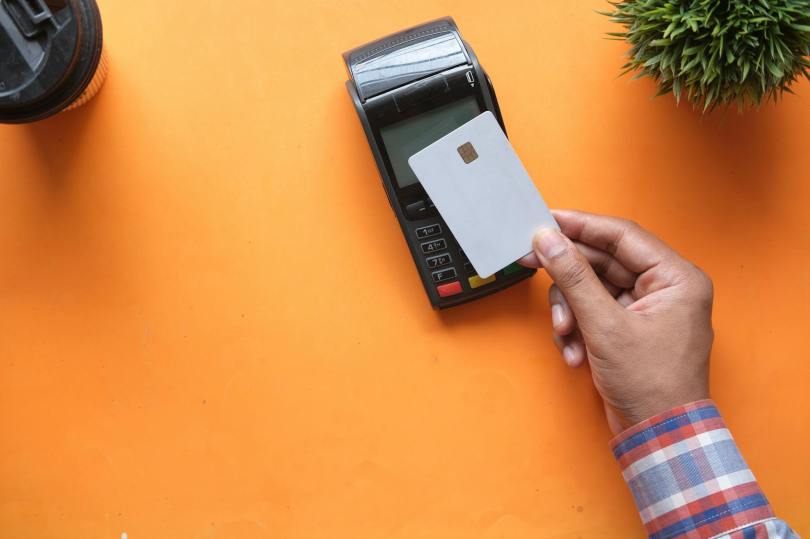
What are the best credit cards?

The best credit cards for me are not necessarily the best cards for you. I don’t find I’ve changed my spending habits much in retirement, but being retired has meant I can spend a bit more time trying to optimize my credit card holdings to maximize benefits to me. One thing that I value above all else is cold, hard, cash. I don’t like “points” cards because understanding what kind of ROI I’m getting is nearly impossible, and always subject to the whims of a points to dollar conversion rate that can be changed at any time. I’m now holding three different credit cards, all of whom pay cash back, and all of them have their place in my spending universe.

Primary Card: Rogers Red World Elite Mastercard

Read about it here. As a Rogers customer1, this card is really the best possible card for my needs:

  • No fees
  • 2% cash back on everything, paid as a reward credit that you then immediately apply to subsequent card purchases; this reward credit is multiplied by 1.5 if you apply it to a subsequent card purchase for a Rogers service.
  • 3% cash back on USD purchases, which erases the 1.5% FX fee charged, and then some
  • Travel insurance, purchase insurance, etc etc
  • Free supplementary cards

The problem with this card is that its credit limit is a bit low; I even asked for an increase and was denied2.

The other problem with this card is that it’s not tied to my normal banking, so I have to pay it manually3. And it only offers a login for the primary card holder, which isn’t ideal.

Secondary Card: CIBC Costco Mastercard

Read about that one here. This one is actually a conversion from another CIBC card I had. Converting a card from one kind to another means you don’t lose your credit limit, which was the main appeal here. I am a Costco member, so this is a good second choice for my needs:

  • no fees
  • 1% cash back on everything except 2% back on gas and Costco.ca, and 3% back on Costco gas4 and restaurants5
  • Cashback paid annually in the form of a Costco gift certificate
  • Travel insurance, purchase insurance etc etc
  • Free supplementary cards

The travel card: Wealthsimple Visa

I’ve been on the waitlist (like many people) for quite a few months for this card now. I finally got my card when I called their support line to query about why a transaction on their prepaid Mastercard6 failed to complete. (Turns out there’s a daily limit on that card that can’t be modified). Anyway, the helpful agent offered to put in a good word for me and a few days later, I was able to successfully apply for the card and immediately download it to my phone7.

The Wealthsimple Visa’s features are a lot like the others:

  • no fee (if you have enough assets with Wealthsimple)
  • 2% cash back on everything, paid into your account every month
  • travel insurance, purchase insurance, etc etc
  • and…most importantly for me, NO foreign exchange fees for any currency

With no foreign exchange fees, Wealthsimple’s Visa becomes the go-to card anytime I’m travelling to a non-US destination. It also becomes my primary card in the event that I cut ties with Rogers, since the only thing the Rogers card does better than the Wealthsimple card is paying for Rogers services.

The Wealthsimple card had a better credit limit than the Rogers card right out of the gate (I guess it helps that I had hard assets with them) but inexplicably does not have the concept of a secondary card, so my spouse is currently locked out of that benefit.

The card that got cut: the CIBC Aventura USD Gold Visa

This was a card I had for a few years when US travel was a more frequent (desirable?) option. It’s not a bad card, especially if you frequently transact in USD, but with two other cards that offered “good enough” coverage on USD purchases, I felt it was no longer needed. And (I forgot this) when I canceled my almost-never-used CIBC USD checking8 account, I lost the “no-fee” aspect of this card. At a cost of zero I might have been convinced to hang on to it “just in case”, but with a $35 annual fee (USD) it was no longer required. An hour long wait on hold with CIBC telephone banking was all it took9.

What card is used when?

  • For foreign currency transactions, Wealthsimple Visa card is best. Rogers card also a good option if USD.
  • For Costco gas and restaurants, Costco card is best.
  • Anything else, Rogers
  1. Internet, television, home phone, if you’re curious. 2 year contract which I’ll probably break at the earliest opportunity 😉 â†Šī¸Ž
  2. Admittedly, this hurt my feelings a bit. â†Šī¸Ž
  3. I could set up a PAD, but I trust Rogers about as much as they trust me, it seems. â†Šī¸Ž
  4. There’s no advantage to actually shopping at a Costco store with this card, which seems weird. My weekly Costco grocery run is paid for with my Rogers Mastercard, since I get 2x the cash back <shrug>. What’s more, the Costco I usually frequent doesn’t have a gas station, and I’m not really willing to make a special trip to go get it — my CAA/Shell combination is about as good. â†Šī¸Ž
  5. These 2% and 3% rewards have annual caps, but I got bored trying to memorize them â†Šī¸Ž
  6. Part of Wealthsimple’s chequing account, a good product, in my view â†Šī¸Ž
  7. Great timing too, since I was in a foreign country at the time. â†Šī¸Ž
  8. I use American spelling here because (a) that’s how CIBC spells it and (b) it really is a US-domiciled account â†Šī¸Ž
  9. Writing that sentence has confirmed for me how low my standards for customer service have become. â†Šī¸Ž

News: Wealthsimple Norbert’s Gambit in Beta

Norbert’s Gambit is a way to save money on USD/CAD conversions. (Want to learn more? I’ve written about it here). Most brokers take extra margin points on these conversions, hidden in the relatively crappy exchange rate you actually get. Since a lot of my retirement holdings are in USD, and since I am a cheapskate, I’ve used Norbert’s Gambit at three different brokerages (BMO Investorline, QTrade and Questrade1) over the years.

And now, Wealthsimple has joined the fray. It’s not open to the general public quite yet, but I did get a notification that I can now perform the Gambit on this platform. This brings Wealthsimple agonizingly close to being a contender for my retirement savings business. They only lack (puzzlingly) USD support in RRIF accounts. Otherwise, they check the other boxes in my “need to have” list for any broker:

  • $0 trading commissions
  • Support for USD accounts in non-registered, RRIF, and spousal RRIF2
  • Norbert’s Gambit3

Wealthsimple’s implementation of the Gambit seems to mirror that of Questrade insofar as they charge a $9.95 plus tax fee for journaling shares, a necessary step of performing the Gambit. There are a few oddball wrinkles documented on their website, none of them show-stoppers in my view:

  • Not available on the Wealthsimple app
  • You can only journal DLR/DLR.U. Other cross-listed shares aren’t supported4.
  • The journaling fee is always charged in Canadian dollars, and by the language used on the website, it sounds like you are blocked from doing the journaling unless you have the cash in your account at the time of the request5

Normally I’d give the feature a whirl to see if it’s comparable to the Questrade/QTrade experience, but I only hold CAD assets at Wealthsimple at the moment. It’s not really a complicated thing to do, the only way Wealthsimple could make the experience better is to do the journaling faster. I’ve documented the timelines involved with doing the Gambit at Questrade here.

  1. Other brokers also support it, but I just have no personal experience with it. â†Šī¸Ž
  2. Wealthsimple doesn’t support this per their website â†Šī¸Ž
  3. People (especially on Reddit) frequently cite Interactive Brokers as the best game in town to do currency conversions. I did at one time have an IB account, and I can confirm that their currency conversion rates across the board are a pittance, and in most cases will be cheaper (and faster) than even Norbert’s Gambit. HOWEVER, if you want to actually get hold of the cash you’re converting, then you can expect VERY long delays before you are allowed to withdraw the funds. â†Šī¸Ž
  4. Most people use DLR/DLR.U to do the Gambit but it isn’t obligatory. At BMO Investorline, if you didn’t want to place a phone call, you had to use some other share combination (I usually chose a Canadian bank stock like RY). Not sure this is still true. â†Šī¸Ž
  5. Questrade lets you carry a negative balance, but of course they will charge interest on that. â†Šī¸Ž

News: Wealthsimple offering free money

Stop me if you’ve heard this before, but yes, there’s another offer out in the market that demonstrates the seemingly never-ending gravy train for the DIY investor who isn’t too dedicated to any particular broker.

It’s Wealthsimple’s turn, again, with a promotion they are calling “The Un(Real) Deal”. Marketing page here, Ts and Cs here, but step one, as in all Wealthsimple promotions, is a registration for the promotion that is painless, but must be done by March 31, 2026. After registering, you have 30 days to initiate account transfers.

In this promotion, Wealthsimple is trying to keep the rewards modest for the deal-hopper, but are pretty darn attractive for the more loyal investor. When you register for the promotion, you pick a lock-in period for transferred-in funds of one of:

  • 1 year, and get 1% cash back payable over 12 months
  • 2 years, and get 3% cash back payable over 36 months
  • 5 years, and get 3% cash back payable over 60 months1

What is particularly noteworthy about this promotion (besides the 3% cash back) is that the maximum you can earn in free money is 3% of five million dollars2. That’s (checks math) $150,000 possible in free money. That is a nice slice of pizza, if you ask me.

It appears that the usual kinds of accounts count as eligible for the promotion: non-registered, TFSAs, RRSPs, RRIFs, RESPs, LIRAs…One missing is spousal RRIFs, but spousal RRSPs are shown, so not sure about that.

If you’re tired of missing out on the gravy train, this could be an even better deal than the aforementioned Questrade deal.

Anyway, there you have it. This is one that I will take a closer look at. If you want a little extra incentive, you can use my referral code and get some additional free cash.

  1. I (meaning chatGPT) ran the numbers at various discount rates (0%,5%,10%) and the present value of 5 year deal always came out ahead. My MSci prof would be so proud of me. At 10% discount rate, the PV of the three options assuming $200k is moved is $1900, $3350, and $4720. â†Šī¸Ž
  2. Yeah, ok, I know most people aren’t moving that kind of dosh, but normally these promotions are capped at a much lower dollar amount. The aforementioned Questrade deal is capped at a maximum reward of $20k, requiring $750k to be moved across 3 accounts. â†Šī¸Ž

News: Questrade Launches Free Money Promo

The customer acquisition fun continues! Who benefits? Those of us with no particular loyalty to any particular online broker!

Questrade’s offer of free money (to a maximum of $20k) applies to both new and existing clients. (Regrettably, I think that since I started my — still uncompleted — transfer last year, I won’t be eligible myself. Now isn’t that a kick in the head? Of course, I’m still collecting from the transfer I did in early 2025.)

Here are the pertinent details, but in summary:

  • Minimum $10k transfer required
  • Base reward: 1% cash back for registered1 accounts, 2% cash back for non-registered accounts
  • Move 3 or more kinds of accounts (one of which has to be non-registered) and double your base reward to 2% for registered accounts, 4% for non-registered accounts
  • Maximum cashback for registered accounts: $10k
  • Maximum cashback for non-registered accounts: $10k
  • Must start the transfer before Feb 2, 2026, and it has to complete by May 29, 2026
  • Payouts start in June 2026 and last for 24 months
  • Asset levels must be maintained until June 20282

So one way to qualify for the maximum reward would be:

  • Move a TFSA worth $250k to get $2500 base
  • Move an RRSP worth $250k to get $2500 base
  • Move a non-registered account worth $250k to get $5000 base

This is 3 accounts so this triggers the multiplier that doubles the reward:

  • $5000 for the TFSA, $5000 for the RRSP, total $10k
  • $10k for the non-registered account

So by moving $750k, one could take advantage of a $20k reward. Which, admittedly, is a pretty high bar, but $20k is not nothin’ either3.

To me, if you’ve grown tired of not getting free money this seems like a pretty good deal, but only if you’re able to qualify for the bonus by moving 3 kinds of accounts. Otherwise, the reward is just 1% and brokers have been more generous than that of late (e.g. QTrade).

So act quickly and decisively, this one will be over before you know it. If you want to show some love, you can even use my Questrade referral code4 🙂

  1. For example: TFSA, RRSP, RRIF, RESP. LIRAs are not listed in the Ts and Cs, though. â†Šī¸Ž
  2. You’re allowed to withdraw 5% with no penalty. If you exceed that, then you don’t get any more bonus payments. Exception: RRIF minimum payments :-). â†Šī¸Ž
  3. It’s more than my current earned income 🙂 â†Šī¸Ž
  4. My referral code is 755609544498867 which will earn you (and me) $50 for your first account. Follow this link to start: https://questmobile.onelink.me/tX0y/419708l0 â†Šī¸Ž

Quick Tip: Tax Loss Harvest by December 30!

Tax loss harvesting is the strategy whereby assets in non-registered accounts are sold to generate a capital loss1. These losses can be used to offset capital gains, either this year, in previous years (up to three years back), or in future years (forever)2.

Since CRA uses the settlement date of your asset sale, and since most (all ?) brokers take a day to settle a trade, this means to get your capital loss in fiscal 2025 you have to sell by December 30 to settle on December 31, the last business day of 2025.

  1. After the current buoyant year in the markets, there’s probably not too many examples of this, but if you bought bonds in 2022…. â†Šī¸Ž
  2. All this and more detailed over at https://www.canada.ca/en/revenue-agency/services/tax/individuals/topics/about-your-tax-return/tax-return/completing-a-tax-return/personal-income/line-12700-capital-gains/capital-losses-deductions.html â†Šī¸Ž