News: Questrade Contest offers free money

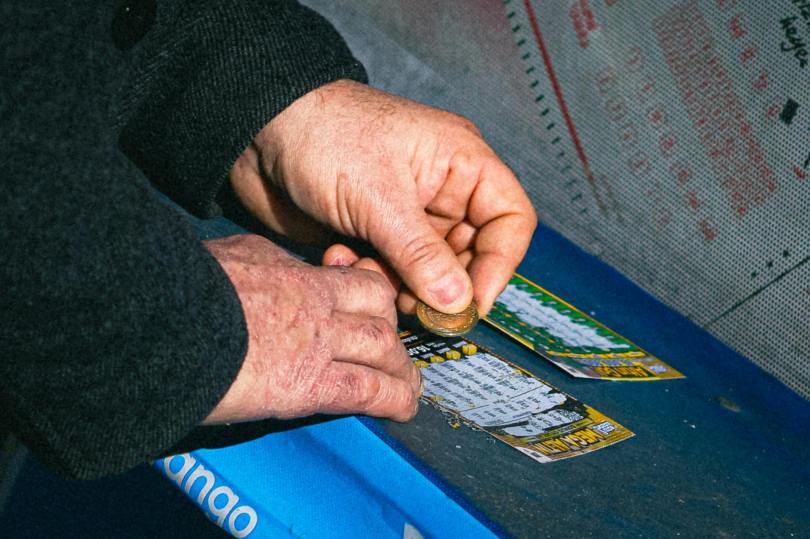
Yup, it’s another promotion. Keep that gravy train going! This time, it’s a contest, so no guarantees, but the rewards are pretty nice if you happen to be so lucky.

  • $175k for your TFSA: (Ts and Cs here)
  • $50k for your RESP: (Ts and Cs here)
  • $40k for your FHSA: (Ts and Cs here)

In each case, all you need to do is to open and fund a new TFSA/RESP/FHSA account ($250), or contribute more than $250 to an existing account, or send a postcard with an essay (yes, really) before the end of the year. One entry per client, per investment vehicle. But you can only win ONE of the three prizes (shucks).

I wonder which contest will actually have the best odds? I contribute to my TFSA every month, so I guess I have a shot, too…

Death, Taxes and Estates: Part 1

I am not a lawyer, accountant or tax expert. Your situation may be a lot different than mine. Seek professional guidance if needed.

What happens to our investments when we die? Having lost both my parents in the past 2 years, I’ve (regrettably) had a lot of exposure to the ins of outs of estates and how they work.

Being Ready for the Inevitable

Fact: we’re all going to die. Pretending this isn’t true isn’t helpful to your survivors. So there are some concrete things you should have in place before that happens.

  • Have a will. Whether DIY, software-assisted1, or prepared by a suit, just get it done — here’s a nice step-by-step guide. And if you do have one, is it up to date? Take a look.
  • Have the will name exactly one executor, with alternate executors in the event your first pick isn’t available . Hearing multiple stories from multiple sources about how much extra work and delay having joint executors causes, I cannot recommend this all-too-common approach. You’re not “playing favourites” by naming one person2.
  • Make sure your executor knows how to get a hold of the will. Be very specific, and repeat this information frequently so it’s top-of-mind.
  • Make sure your RRIFs/RRSPs/TFSAs name successors and/or beneficiaries. I covered that topic in more detail here.
  • Make sure any life insurance policies name a beneficiary
  • Make sure your workplace pension3 names a survivor4.
  • Prepare a death binder5 with all assets clearly specified — provider name, account numbers, name on the account. Is the list really long? Maybe it’s time to trim that list down. Every provider on that list will create work for your executor. So if you want to be kind, keep the list of providers small. Make sure your executor knows where to find it.
  • Have a month or two of expenses in cash that is accessible by those who survive you, like in a joint chequing account. Assets held solely in your name will be frozen when you’re dead, possibly for weeks or months.
  • Set up someone (your executor, for example) as your authorized representative with CRA. This makes dealing with taxes much easier for those that you leave behind. How? Read here.

My Situation

My parents held no real estate, and all their assets were held in DIY investments (RRIF, TFSA and non-registered accounts). They each had a will and named the other as the executor with me as the alternate. They dealt with two providers — one for their DIY investments (BMO Investorline) and one for their day-to-day banking (CIBC). So in terms of complexity I think I had it pretty easy.

Dealing with the death of the first parent

My Dad’s death was not a surprise, and because of this I was able to maximize his TFSA contributions before he died. Dad did hate paying taxes.

Although my Mom was legally the executor, I did almost all the work involved. Most providers seemed to be pretty good about dealing with me once they got confirmation from my Mom. The key documents and facts you’ll be asked for in almost every encounter are the same, so have these ready each and every time:

  • Date and place of birth of the deceased
  • Date and place of death of the deceased
  • SIN number of the deceased
  • A death certificate (this is issued by the funeral home, typically)
  • The will
  • Funeral home invoice (if applying for a death benefit)

Dealing with the bank was easy. One 30 minute meeting6 and all was sorted.

As many DIY financial services providers don’t have brick and mortar locations, high quality digital versions7 are also generally accepted. In the case of BMO Investorline, I had to visit a BMO branch8 with the documents so they could send them as “true copies”. How a provider with no affiliation with a bank does this, no idea9.

In the case of any DIY investment held in the deceased’s name — those assets get frozen upon notifying the provider. This can be problematic if one is relying on those assets to say, pay rent, or pay for funeral arrangements.

The unexpected complication arose from the non-registered joint account — it didn’t just “convert” to removing one person’s name from the account — you have to open a new, individual account, involving all the same paperwork as though you were a new client, and then transfer the joint assets “in kind” to the new account. During this time, the funds were not accessible. This is beyond annoying, but I suspect this is the same regardless of who your provider is. My mom lost access to her joint account for about 6 weeks while this was settled.

Taxes for the death of the first parent

The tax return you file for a person who has died in this scenario is called (ominously) the Final Return. A person who dies is treated as though they sold all their assets on the day of death. I did not file a T3 Return10 return for my Dad, since all the assets passed through to my Mom. If he had had non-registered assets held solely in his name, I think I would have had to.

  • For a RRIF or RRSP, this means CRA assumes you sold all the holdings on the day you died and recognized it as income11
  • For a non-registered account held solely in one name, CRA assumes you sold all the holdings on the day of death and recognized any capital gains at that time.

I was able to successfully file the Final Return for my Dad using Wealthsimple’s tax software12. The Final Return cannot be eFiled — you have to print it and send it using snail mail.

Adjustments after the death of the first parent

After my Dad died and my Mom had all the combined TFSA/RRIF assets in place, we updated her TFSA and RRIF to name me and my siblings as beneficiaries by filling out a form. This proved to be helpful in reducing the tax bill a bit when she died. More on that in a future post.

  1. “willful.” seems to be a trendy option nowadays: https://www.willful.co/ ↩︎
  2. One could argue the opposite — just give the duties to your least favourite relative as a last vengeful act ↩︎
  3. Some workplace pensions provide death benefits and/or an ongoing survivor pension, but only if you take the trouble to name a survivor in that pension. ↩︎
  4. And if you do, I’m envious 😉 ↩︎
  5. Paper is probably less trouble than trying to provide a file location/passwords, but YMMV. ↩︎
  6. Prearranged online of course. You can’t just walk into a branch to do anything these days. ↩︎
  7. You’ll get good at this workflow or go crazy trying. Take photo on phone, airdrop to laptop, compress/convert image so it can get through email… ↩︎
  8. Do NOT assume that the brokerage has anything to do with the bank with whom they share a logo. I learned this the hard way with BMO/BMO Investorline. ↩︎
  9. Maybe notarized documents? Let me know at comments@moneyengineer.ca. ↩︎
  10. AKA “Estate Return”. A person who dies becomes a new tax entity, typically named Estate of <dead person> ↩︎
  11. Which is why you name a successor for your RRIF — this tax penalty is thereby avoided ↩︎
  12. It was because Intuit Quicktax could not handle this scenario that I ended my decades-long relationship with them. ↩︎

Significant birthdays for the DIY Investor

There are significant birthdays every DIY investor should be aware of. Did you know about all of them?

The list below is a gross simplification — like all things in the Canadian Tax code, the exceptions and caveats fill many pages, but this is roughly correct. I’ve included links so you can read the relevant sections yourself and see if you agree with my simplifications!

The day of your child’s birth

Per the feds, a birth certificate for your child is all you need to apply for a Social Insurance Number. And although their working days are far into the future, their RESP eligibility starts right away — but you can’t open an RESP for a child unless that child has a SIN. The lifetime limit for donations to an RESP is currently set at $50k/child. The sooner those contributions start, the sooner you can collect free money (the CESG, $500/year, $7200 per child lifetime), and the longer your contributions can benefit from the power of compounding.

Your 18th birthday

This is significant one for a number of reasons!

TFSA

Once you turn 181, you can open a TFSA and begin contributing. Even if you don’t start contributing, your TFSA limit starts to accumulate the year you turn 18. In 2025, that annual limit is $7000 per year, and it grows at the rate of inflation2. It’s cumulative, so it’s not a “use it now or lose it forever” kind of proposition. At the start of every calendar year, there are a flurry of announcements indicating the new annual limit.

You can contribute to your TFSA forever, even in retirement. I am!

CPP contributions kick in

If you’re over 18 and earn more than $3500 a year, you’ll have to pay CPP contributions. While current you may balk at this sort of reduction in your take-home pay, future you will appreciate the inflation-index adjusted salary you can collect later in life.

FHSA

You can open a First Home Savings Account on your 18th birthday…or maybe your 19th birthday3. And the year you open it, you add $8000 in eligible contribution room…which continues every year, to a maximum of $40000.

Your 19th birthday

The so-called “age of majority4” in Ontario allows you to roll in free money in the forms of GST credits, Trillium benefits5 (in Ontario) and carbon tax credits6 . The cost of admission is filing a tax return. No excuses — plenty of online providers offer free returns for “simple” returns and my friends at Wealthsimple offer “pay what you want” tax filing.

This is also a time you are eligible to open an RRSP7, which may make sense if you’re already maxing out your TFSA contributions.

Your 35th birthday (or later)

An RESP can only be open for 35 years.

Your 60th birthday

This is the first year you can choose to collect CPP; generally speaking, most experts recommend that you delay collecting CPP for as long as possible, for two reasons:

  • It may be the only inflation-protected income you have (this applies to me, I have no other pension)
  • You get more money the longer you wait. (you lose 0.6% of payment for every month you start before your 65th birthday. That adds up to a reduction of 36% if you start on the day you turn 60).

My tools page includes the very helpful CPP calculator, which can help you make a decision concerning your CPP start date.

Your 65th birthday

This is the first year you can choose to collect OAS. Experts are a little more split on whether or not to delay this one — the benefits to delaying to age 70 are not as strong as for CPP8. My plan is to delay, as it’s another inflation-adjusted benefit.

If you’re collecting any sort of pension (RRIF payments, CPP, employer pension) this is the first age at which you can split that income with your spouse. This can reduce your tax bill.

Your 70th birthday

You have to start taking CPP and OAS by this time.

Your 71st birthday

You can no longer contribute to an RRSP and you have to open a RRIF. Lots of the literature out there seems to imply that this is the ONLY time you can open a RRIF, but rest assured, there’s no minimum age for opening a RRIF — I’ve been collecting from mine since the start of the year 🙂

Your 85th birthday

This is the last year you can start collecting from an ALDA (advanced life deferred annuity) you have set up. The ALDA is a vehicle I just learned about, and need to do a bit more research. It may be a way to fund income in your later years when the complexity of managing withdrawals in a DIY fashion may be too cognitively overwhelming.

What birthdays are you thinking about? Let me know at comments@moneyengineer.ca.

  1. Or possibly 19, depending on where you live. ↩︎
  2. But only in increments of $500. Even though inflation is drifting back down to more usual levels, doing the math indicates that we should expect more frequent increases in the TFSA limits in the years to come. Adding $500 to a $7000 limit (a 7% bump)is a lot easier than adding $500 to a $5000 limit (a 10% bump) ↩︎
  3. Per https://www.canada.ca/en/revenue-agency/services/tax/individuals/topics/first-home-savings-account/opening-your-fhsas.html “certain provinces and territories, the legal age at which an individual can enter into a contract (which includes opening an FHSA) is 19 years old” ↩︎
  4. This language is so opaque, it’s like a parody of government speak. Or maybe it’s a commentary on the aging demographic of Ontario? ↩︎
  5. Some of the benefits even kick in earlier ↩︎
  6. A limited time offer, presumably ↩︎
  7. Per CRA, there is NO minimum age at which you can open an RRSP. Contributing to an RRSP requires that you enter into a contract (meaning you have to be of an age that permits this, either 18 or 19) and you have to earn money. ↩︎
  8. It’s still 0.6% per month of delay, or 36% over 5 years. That’s pretty good RoI, in my view. ↩︎